Apartment Security Checklist: Before, During, and After Move-In
Moving into your first apartment is exciting, but security shouldn't be an afterthought. This checklist covers what to evaluate before signing, what to verify on move-in day, and how to establish safety habits in your first week.
Knockli Team
Building Access Experts
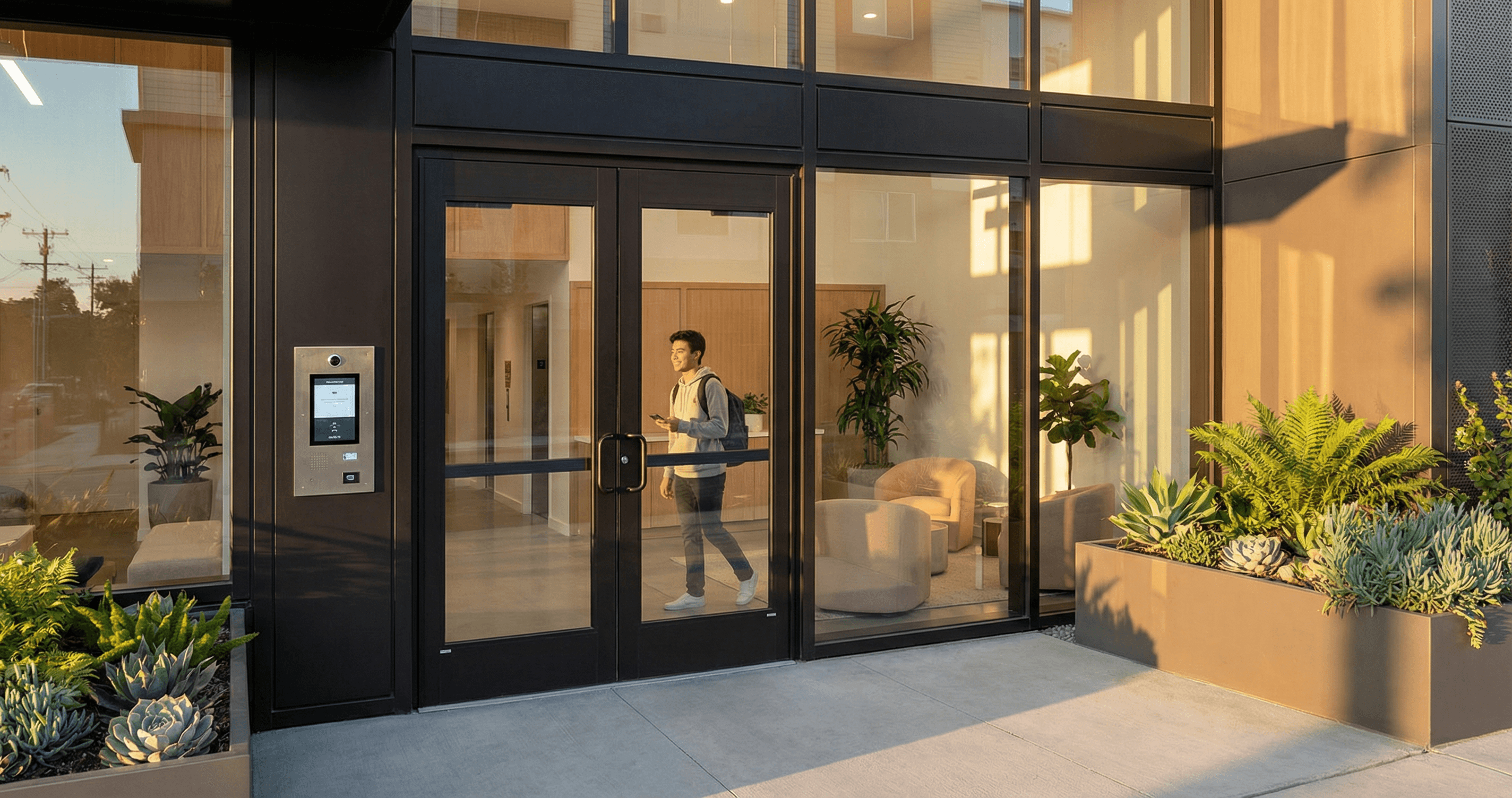
Moving into your first apartment is a milestone. You finally have a space that's entirely yours, with your own rules, your own schedule, and your own key. It's exciting and a little nerve-wracking at the same time.
Part of that anxiety is natural: for the first time, you're solely responsible for your own safety. There's no roommate to check the door, no family member to answer the buzzer, no one else to notice if something seems off. That responsibility can feel heavy, especially in an unfamiliar building.
The good news is that apartment security isn't complicated. With the right preparation before, during, and after your move, you can create a space where you feel genuinely safe. This apartment security checklist walks you through each phase, so you can start your new life with confidence instead of worry.
Why Apartment Security Belongs on Your Move-In Checklist
Most first-apartment advice focuses on furniture, utilities, and renters insurance. Security rarely makes the list until something goes wrong.
But the data suggests it should be a priority from day one. According to a comprehensive survey of apartment renters, 71% of apartment residents believe their property management should do more to improve security. Even more concerning: 60% of renters don't feel completely safe in their apartments, including those who already have security measures in place.
What is apartment security for renters? Apartment security for renters includes the features, habits, and technologies that help protect you and your belongings in a rental property. This covers building-level security (controlled entry, cameras, intercoms), unit-level security (locks, windows, doors), and personal practices (verifying visitors, knowing neighbors).
First-time renters face unique challenges. You're learning a new building, new neighbors, and new routines all at once. You don't yet know which buzzes are normal and which are suspicious. You haven't had time to build the trust networks that help longtime residents feel secure. If you'll be living alone, the stakes feel even higher. For a deeper guide on solo apartment safety, see our article on how to feel safe living alone.
That's why building security awareness from the start matters. The habits you establish in your first week become automatic, and the features you evaluate before signing a lease determine what you're working with for the next year.
Before You Sign: Security Questions for Your Apartment Tour
The best time to evaluate apartment security is before you commit. Once you've signed a lease, you're working with whatever the building has. During your tour, you have leverage to ask questions and make informed comparisons.
Security Features to Ask About
| Feature | Why It Matters | What to Look For |
|---|---|---|
| Controlled entry | Prevents random access to building | Key fob, code, or intercom required for entry |
| Working intercoms | Allows you to verify visitors before buzzing in | Test it during your tour if possible |
| Security cameras | Deters crime and provides evidence | Cameras in lobby, parking, and common areas |
| Well-lit areas | Reduces hiding spots and vulnerability | Check parking lots, walkways, and entrances |
| Deadbolts | Stronger than chain locks or basic latches | Deadbolt on unit door, not just a doorknob lock |
| Peepholes or cameras | Lets you see visitors before opening | Door viewer or smart doorbell option |
Questions to Ask the Leasing Office
Don't be shy about asking direct questions. A good property manager will appreciate that you take security seriously:
-
"Can I have the locks changed when I move in?" Previous tenants or their friends may still have keys. Many buildings will re-key locks upon request.
-
"What's the policy for after-hours emergencies?" Know who to call if there's a security concern at 2 AM.
-
"Have there been any security incidents in the building recently?" They may not answer in detail, but the response itself tells you something.
-
"How do deliveries work here?" Package theft is rampant in apartments. Security.org's 2025 report found that people living in apartments are more than three times as likely to have packages stolen compared to those in single-family homes.
-
"Can I install a video doorbell or security camera?" Some buildings allow renter-friendly options; others prohibit them.
Red Flags During Your Tour
Trust your instincts. If something feels off, it probably is. Watch for:
- Propped-open doors: Suggests residents regularly bypass security
- Broken or disabled intercoms: You won't be able to screen visitors
- Poor lighting: Dark hallways, stairwells, or parking areas create risk
- Unmonitored entrances: Side doors or garage entries without cameras
- Dismissive answers: A leasing agent who waves off security questions
- Visible damage: Broken windows, kicked-in doors, or graffiti suggest neglect
If a building has several red flags, keep looking. Your safety is worth a few more apartment tours.
Move-In Day: Your Apartment Security Checklist
You've signed the lease and picked up your keys. Before you unpack a single box, walk through this apartment security checklist for your new unit.
Immediate Steps When You Get the Keys
1. Request a lock change (if you haven't already)
Even if the building says they changed the locks, verify it or request re-keying. ADT's renter security checklist emphasizes this as a critical first step since previous tenants, their friends, or ex-partners may still have keys.
2. Test every lock
- Front door: Does the deadbolt engage smoothly?
- Windows: Do all locks work? Are any painted shut?
- Sliding doors: Is there a security bar or pin?
- Any other entry points: Balcony doors, back doors, etc.
3. Document existing damage with photos
Take timestamped photos of any security issues: broken locks, missing peephole, damaged door frame. Email these to your landlord immediately. This protects you from being charged for pre-existing problems and creates a record if issues aren't fixed.
4. Test smoke detectors and find fire exits
Press the test button on every smoke detector. If they don't work, request new batteries or replacements before you sleep there. Walk the route to the nearest fire exit so you know it without thinking.
5. Locate emergency resources
Note the location of:
- Building management or emergency contact number
- Nearest fire extinguisher
- Emergency exits on your floor
- Where to go if you need to leave quickly
Your Move-In Day Security Checklist
Use this as a printable checklist:
- Locks changed or re-keyed
- All door locks tested and working
- All window locks tested and working
- Deadbolt present on front door
- Peephole or door viewer available
- Smoke detectors tested and working
- Fire escape route identified
- Emergency contacts saved in phone
- Existing damage documented with photos
- Building entry system tested (key fob, code, intercom)
Your First Week: Establishing Security Habits
The first week in a new apartment sets patterns that become automatic. Use this time to build security habits you won't have to think about later.
Daily Habits to Start Now
Lock immediately when entering. Don't set down groceries first. Don't take off shoes. Close the door and lock it as a single motion. This prevents "tailgating" where someone follows you in, and ensures you're never accidentally unlocked.
Verify before you buzz. When your intercom rings, ask three questions before unlocking: Who are you? What apartment are you looking for? Why are you here? A legitimate visitor can answer these easily. Someone who can't might not belong in your building. For a deeper dive on this, read our guide on how to screen apartment visitors when you're not home.
Get to know at least one neighbor. Introduce yourself to someone on your floor. Exchange phone numbers for emergencies. Neighbors who recognize each other notice when something seems off, and that awareness creates community security.
Setting Up Delivery Management
With e-commerce being the default way many of us shop, delivery management is a security issue. Here's how to handle it:
- Update delivery instructions on Amazon, UPS My Choice, and FedEx Delivery Manager with your new address and specific instructions
- Identify secure delivery spots in your building (package room, locker, or leasing office)
- Consider your buzzer setup: Can you answer from your phone? What happens if you're in a meeting?
If your building has a phone-based buzzer (where buzzes call your phone), you can set up systems to handle deliveries even when you can't answer. For more strategies, see our guide on 5 ways to never miss a delivery in your apartment.
Privacy Basics
A few small habits reduce your visibility as a new (and possibly solo) renter:
- Use your first initial on the buzzer directory rather than your full name
- Don't advertise that you live alone to delivery drivers, maintenance workers, or new acquaintances
- Be cautious on social media about sharing your new address or when you'll be away
Renter-Friendly Security Upgrades
One advantage of renting is that major security infrastructure isn't your problem. But you can still add meaningful protection with tools that don't require permanent installation or landlord approval.
What You Can Add Without Landlord Permission
| Security Upgrade | Typical Cost | Installation | Best For |
|---|---|---|---|
| Battery-powered video doorbell | $50-200 + $3-10/mo | Adhesive mount, no wiring | Seeing who's at your door |
| AI-powered intercom solution | $15-30/mo | No installation (phone-based) | Handling buzzer calls when you can't answer |
| Door reinforcement lock | $30-50 | No drilling needed | Extra security when home |
| Window/door alarms | $15-30 | Adhesive sensors | Alert for unexpected entry |
| Smart plugs for lights | $15-30 | Plug and play | Making your apartment look occupied |
According to the Rently 2025 Smart Apartment Trends Report, 65% of renters are willing to pay extra monthly for smart security amenities, with over half comfortable paying more than $20 per month. The demand reflects how much these tools improve peace of mind.
AI-Powered Intercom Solutions
If your building has a phone-based buzzer (where visitors buzz your unit and it calls your phone), AI solutions can handle those calls even when you're busy or away.
When someone buzzes, the AI answers and asks who they are. Based on rules you set, it can automatically unlock for verified deliveries, decline unknown callers during quiet hours, or notify you to decide. Everything gets logged so you can review what happened. For a complete breakdown of smart security options, see our smart apartment security guide for renters.
The key advantage: these work with your existing buzzer system. No hardware changes, no landlord approval, no installation appointments. You're just changing which phone number your unit dials.
When to Involve Your Landlord
Some security issues are your landlord's responsibility. Know what you can request and what they're obligated to provide.
What You Can Request
- Lock re-keying or replacement: Most buildings will do this at move-in
- Peephole installation: If your door doesn't have one
- Deadbolt repair or replacement: If it's not functioning properly
- Improved lighting: In hallways, stairwells, or parking areas
- Security camera review: If an incident occurs
What's Typically Landlord Responsibility
- Functioning locks on all entry points
- Working smoke and carbon monoxide detectors
- Secure building entry (if marketed as a secure building)
- Common area lighting and maintenance
- Addressing reported security concerns
How to Document and Report
If you discover a security issue:
- Document it: Photos, dates, written description
- Report in writing: Email creates a record; phone calls don't
- Follow up: If not addressed, send a follow-up with your original report attached
- Know your rights: Tenants have legal protections around habitable conditions, which often include security
Starting Your Apartment Life on Secure Footing
Your first apartment is the beginning of a new chapter. The independence feels amazing, and you deserve to enjoy it without constant worry about safety.
The apartment security checklist above isn't about fear. It's about preparation. When you've evaluated a building's security before signing, verified your unit on move-in day, and established good habits in your first week, you've done the work. You can relax and enjoy your space.
Security in an apartment comes from layers: building-level features, unit-level protections, personal habits, and community awareness. No single measure is perfect, but together they create an environment where you can feel genuinely safe.
Welcome to your first apartment. You've got this.
Moving into your first apartment is exciting, but managing your buzzer shouldn't add stress. Knockli's AI doorman answers your building's intercom, screens visitors, and handles deliveries so you can focus on making your new place feel like home. Setup takes 10 minutes, works with your existing buzzer, and costs less than your streaming subscriptions.
Related Articles
Apartment Access Control: Stop Buzzing In Strangers
Learn what apartment access control means for renters, why your buzzer is a security risk, and how to control entry without hardware.
Apartment Intercom Not Working? Fixes That Actually Help
Apartment intercom not working? Diagnose common buzzer problems by symptom: static, no audio, door won't unlock, and more. Practical fixes you can try today.
Locked Out of Your Apartment? Here's What to Do Right Now
Locked out of your apartment? Don't panic. This step-by-step guide covers who to call, what it costs, and how to prevent it from happening again.