Building Access Technology ROI: Prove Value, Get Approval
Technology implementation is now a top-3 challenge for property managers. Here's how to calculate building access technology ROI and get owner approval with a data-driven business case.
Knockli Team
Building Access Experts
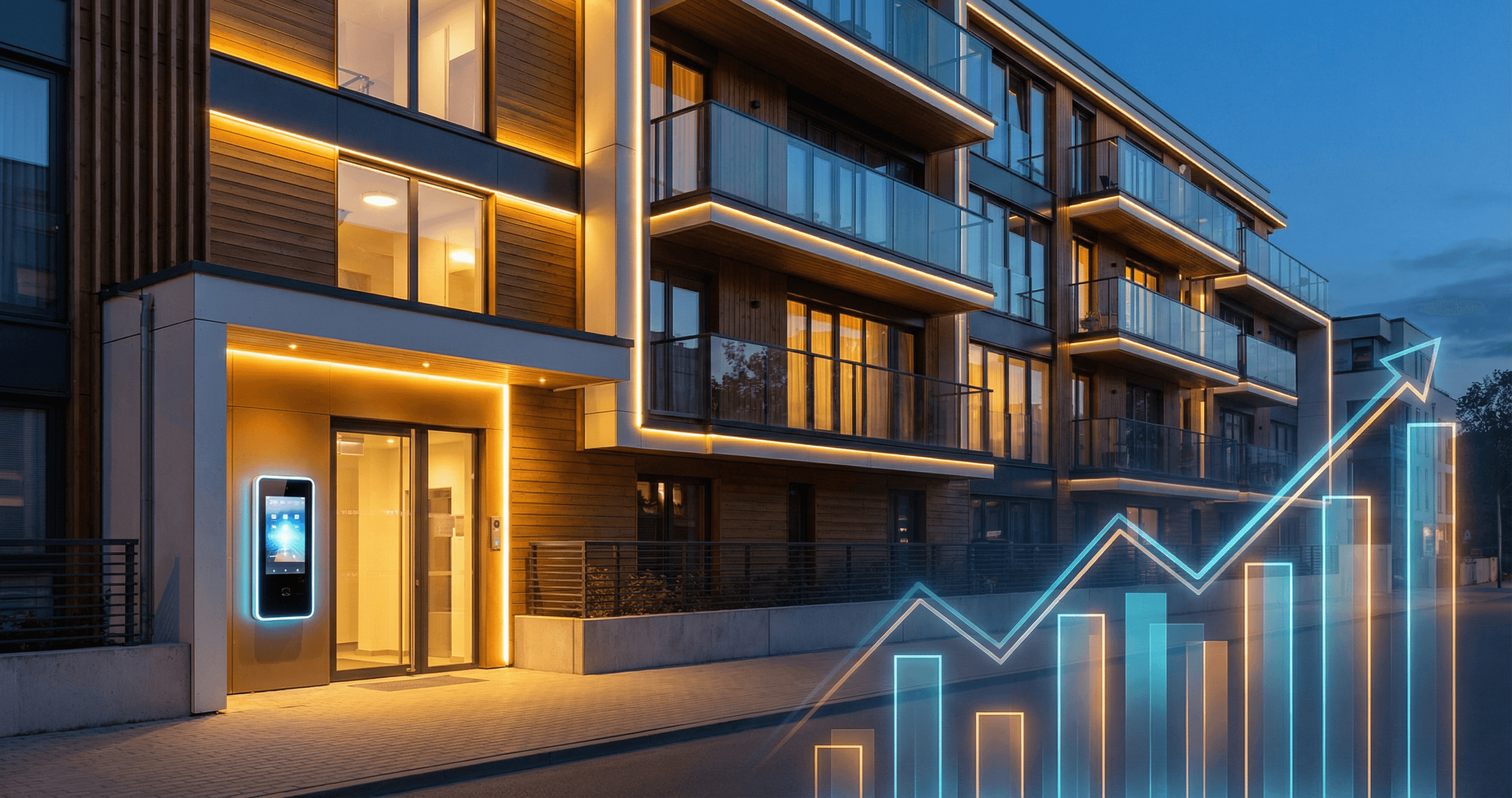
You've found a building access solution that would solve real problems for your residents and staff. The technology checks out. The pilot results look promising. But now comes the hard part: getting ownership to approve the investment.
According to NAA and AppFolio's 2025 research, technology implementation is now a top-3 challenge for property management leaders. Not because the technology doesn't work, but because the business case often doesn't get made effectively. Ownership wants to see numbers, not features. They want ROI projections, not demos.
This article provides the framework for calculating building access technology ROI and presenting a business case that gets approved.
What Ownership Actually Wants to See
Before diving into calculations, understand what drives approval decisions. Property owners and investors evaluate technology investments through a financial lens focused on three questions:
1. What's the payback period? How long until the investment pays for itself? For access technology, owners typically expect 6-18 months.
2. What's the impact on NOI? Net Operating Income is the metric that matters most. Technology needs to either reduce operating expenses or increase revenue (through rent premiums or reduced turnover).
3. What's the risk profile? Large capital expenditures with long implementation timelines carry more risk than operational expenses with quick deployment.
The NMHC Technology Benchmarking Report confirms that multifamily operators increasingly evaluate technology through these financial metrics rather than feature comparisons.
Understanding Building Access Technology ROI: The Full Cost Picture
To build a compelling business case, you need accurate cost data for all the options ownership might consider. Here's what the numbers actually look like.
Traditional Doorman or Concierge Services
According to Bureau of Labor Statistics data, concierges in real estate earn a median annual wage of approximately $45,000, with total compensation (including benefits, payroll taxes, and turnover costs) pushing the real cost to $60,000-80,000+ annually.
For 24/7 coverage, you need multiple staff members. A building requiring round-the-clock coverage faces annual costs of $150,000-250,000 or more.
Hardware-Based Access Control Systems
Hardware replacement projects (video intercoms, IP-based systems, smart locks throughout) typically run:
- Equipment costs: $200-500 per unit
- Installation: $100-300 per unit
- Building infrastructure: $10,000-50,000 for larger properties
- Total for a 100-unit building: $40,000-80,000+ upfront
Add ongoing maintenance, software licenses, and eventual replacement cycles, and the total cost of ownership can exceed $100,000 over five years.
Software-Only Access Solutions
Software solutions that work with existing phone-based intercoms offer a different cost structure:
- Monthly base fee: $100-400 per building
- Per-unit costs: $2-10 per unit monthly
- Hardware: $0 (works with existing systems)
- Annual cost for a 100-unit building: $2,400-12,000
This is the category where solutions like Knockli operate, where AI handles intercom calls without requiring hardware replacement. The Association for Smarter Homes & Buildings' 2025 ROI study found that software-first approaches show 2-5% NOI improvement with significantly faster payback periods than hardware projects.
Cost Comparison Summary
| Approach | Year 1 Cost | 5-Year TCO | Implementation Time | Risk Level |
|---|---|---|---|---|
| Traditional Doorman (24/7) | $150,000-250,000 | $750,000-1,250,000 | Immediate | Low |
| Hardware Replacement | $50,000-100,000 | $80,000-150,000 | 3-6 months | Medium |
| Software-Only Solutions | $2,400-12,000 | $12,000-60,000 | Days to weeks | Low |
The gap between software solutions and alternatives is significant enough that even conservative projections show substantial savings.
Calculating Building Access Technology ROI
ROI for access technology comes from four categories: direct cost avoidance, operational efficiency gains, resident retention impact, and potential revenue generation. Not every building will see value in all four, but most will hit at least two or three.
Direct Cost Avoidance
If you're currently paying for doorman services, overnight security, or considering hardware replacement, the direct savings are straightforward.
Doorman replacement calculation:
- Current annual cost: $65,000
- Software solution annual cost: $6,000
- Annual savings: $59,000
- ROI: 983%
Hardware project avoidance:
- Proposed hardware project: $75,000
- Software solution 5-year TCO: $30,000
- Savings: $45,000 over 5 years
For buildings considering whether to modernize building access without hardware replacement, the financial case often makes itself.
Operational Efficiency Gains
Property managers spend significant time on buzzer-related tasks that technology can handle automatically. According to Buildium's 2026 Property Management Industry Report, AI adoption in property management jumped from 20% to 58% largely because of these efficiency gains.
Time savings to quantify:
- Responding to intercom calls: 15-30 minutes daily
- Coordinating vendor access: 2-4 hours weekly
- Handling after-hours emergencies: Variable but costly
- Managing delivery complaints: 1-2 hours weekly
If you can automate routine building operations, the staff time recaptured has real dollar value. At a fully-loaded cost of $25-35/hour for property management staff, 5 hours weekly of recovered time equals $6,500-9,100 annually per building.
Resident Retention Impact
This is where the ROI calculation gets interesting. Resident turnover costs $3,000-5,000 per unit (vacancy loss, turnover prep, marketing, administrative time). Buildings with better access experiences see measurably lower turnover.
Our analysis of resident turnover costs and building technology shows that reducing turnover by even 2-3 units annually on a 100-unit building saves $6,000-15,000.
Access-related complaints (missed deliveries, after-hours issues, visitor frustration) are among the most common reasons cited in exit surveys. Addressing these directly impacts retention.
Revenue Generation Opportunity
Some property managers recover technology costs entirely through tech service fees added to lease renewals. A $10-15 monthly "technology amenity fee" passed through to residents can offset or exceed the software cost.
- 100 units × $10/month = $12,000 annually
- Software cost: $6,000 annually
- Net gain: $6,000
This approach works best when the technology provides visible resident value, like delivery management, visitor notifications, and reduced buzzer interruptions.
ROI Formula
Here's the complete calculation framework:
Annual Benefit = (Direct Cost Savings) + (Staff Time Value) + (Turnover Reduction) + (Revenue Generation)
Annual Cost = Software Subscription + Any Integration Costs
ROI = (Annual Benefit - Annual Cost) / Annual Cost × 100
Payback Period = Annual Cost / Monthly Benefit
For a typical 100-unit building using a software solution like Knockli:
- Direct savings (vs. no solution): $0 (baseline comparison)
- Staff time savings: $7,800/year
- Turnover reduction (2 units): $8,000/year
- Revenue generation: $12,000/year
- Total annual benefit: $27,800
- Annual software cost: $6,000
- ROI: 363%
- Payback period: 2.6 months
Building Your Business Case Presentation
Numbers alone don't get approvals. How you present them matters.
What to Include
Executive summary (one page):
- Problem statement (current pain points with data)
- Proposed solution (what you're recommending)
- Financial summary (ROI, payback period, 3-year projection)
- Risk mitigation (pilot program, implementation timeline)
Detailed analysis:
- Current state costs (documented)
- Proposed solution costs (quotes in hand)
- ROI calculation with assumptions stated
- Implementation timeline
- Vendor comparison (if applicable)
For help structuring the evaluation, our building access technology evaluation framework covers the key questions to address.
Metrics That Move Ownership
Lead with these numbers:
| Metric | Why It Matters | How to Present |
|---|---|---|
| Payback Period | Shows speed of return | "Positive ROI within 6 months" |
| Annual NOI Impact | Ties to property valuation | "$X added to NOI" |
| Total Cost of Ownership | Shows full picture | "5-year TCO comparison" |
| Risk Profile | Addresses concerns | "No capital outlay, cancel anytime" |
Addressing Common Objections
"We tried technology before and it didn't work." Acknowledge past challenges. Distinguish between hardware projects (long timelines, integration issues) and software solutions (quick deployment, lower risk). Propose a pilot on one building before portfolio rollout.
"Our buildings are too old for smart technology." Software-only solutions work with existing phone-based intercoms, often the same systems installed decades ago. No hardware replacement required. B-Line's ROI calculation guide covers how to assess compatibility without major capital investment.
"Residents won't use it." Most software solutions work without resident involvement. Building-wide policies handle everything automatically. Optional resident apps add convenience but aren't required.
"What about security concerns?" Address this directly with audit trail capabilities, policy-driven automation (not AI deciding independently), and fail-safe defaults. Technology provides better documentation than manual processes.
The Pilot Proposal
If full approval isn't forthcoming, propose a limited pilot:
- Scope: Single building, 30-60 days
- Success metrics: Staff time savings, resident feedback, incident logging
- Decision point: Portfolio rollout if metrics hit targets
Pilots reduce perceived risk and provide real data for the full business case. According to Multifamily Executive's 2025 tech trends analysis, pilot-first approaches have become the standard for technology adoption in multifamily.
Making the Ask
When you've built your case, request the meeting. Come prepared with:
- One-page executive summary with the key numbers
- Detailed analysis document for those who want to dig deeper
- Vendor quotes showing actual costs
- Pilot proposal as a fallback option
- Timeline showing implementation and expected results
The strongest business cases aren't about the technology. They're about the financial outcomes ownership cares about: reduced costs, improved NOI, and managed risk.
Ready to build your business case? Knockli's AI-powered building access works with existing phone-based intercoms, starting at $149/month with no hardware costs. Request a pilot for one building and let the numbers make the case for portfolio rollout.
Related Articles

Last-Mile Delivery's $95 Billion Problem Routing Can't Solve
The logistics industry optimized routing while $95B in waste accumulates at building doors. Why old-stock housing drives delivery failure.
Apartment Access Control Without the Capital Expense
76% of apartment buildings still use physical keys. See how software-first access control delivers modern security without six-figure hardware costs.
Smart Buzzer for Rentals: Automate Every Building Entrance
A smart buzzer for rentals automates visitor screening, delivery access, and entry policies with no hardware changes. Full guide for property managers.