Modernize Building Access Without Hardware Replacement
Most property managers assume modernizing building access means ripping out old intercoms and installing expensive new hardware. It doesn't. Software-first solutions let you upgrade legacy buzzer systems in minutes with zero capital expenditure.
Knockli Team
Product Team
Building the future of smart building access, one buzzer at a time.
Key Takeaways
- Software-first solutions let property managers upgrade legacy phone-based buzzers to smart access control without hardware replacement
- Setup takes 10-15 minutes per building with no electricians, no installations, and no approval delays
- AI-powered visitor screening can reduce delivery-related resident complaints by up to 90%
- Over 70% of renters say smart building amenities influence their leasing decisions (NMHC)
- Zero capital expenditure makes this approach accessible for budget-conscious portfolios
The Hidden Cost of Your Building's Old Buzzer
Building access is one of the most common sources of resident complaints in multifamily housing, and most property managers know the routine all too well. A resident calls frustrated because they missed another delivery. The front office fields complaints about solicitors buzzing units at dinner time. Someone let in a stranger who "said they were a delivery driver." And maintenance can't get into the building because the tenant forgot they scheduled a visit.
These aren't minor inconveniences; they're operational drains that add up to real costs in resident turnover, staff time, and competitive disadvantage.
Here's the good news: you don't need to rip out your intercom system to fix these problems. Software-first solutions now let property managers upgrade legacy buzzer systems to smart access control in minutes, not months, and without any capital expenditure on hardware.
This guide will show you exactly how.
Why Legacy Buzzer Systems Fail Modern Expectations
Most multifamily buildings, especially those built before 2015, use phone-based intercom systems. When a visitor buzzes a unit, the system calls the resident's phone number. The resident presses a key (like "9") to send DTMF tones that unlock the door.
This technology works reliably. The problem? It was designed for a different era.
The Package Delivery Explosion
According to the National Apartment Association, apartment residents now receive an average of 8-10 packages per month, a number that continues growing with e-commerce adoption. When every package requires a buzzer interaction, residents either miss deliveries while at work or face constant interruptions.
For property managers, this means:
- Increased resident complaints about missed deliveries
- Package rooms overflowing with "sorry we missed you" returns
- Front desk staff spending hours on delivery coordination
- Residents leaving negative reviews citing delivery frustrations
After-Hours Headaches
Late-night buzzers don't discriminate. Food delivery at 11 PM, lost visitors at 1 AM, or persistent solicitors at 7 AM: these disruptions generate complaints that land on your desk.
Without smart screening, your options are limited:
- Let everything through (security risk, resident annoyance)
- Block everything after hours (frustrated legitimate visitors)
- Route to on-call staff (expensive, not scalable)
The Security Blindspot
Traditional buzzers provide zero visibility. Someone claims to be a delivery driver? You can't verify. A resident lets in a stranger? You have no record. An incident happens? Good luck reconstructing the timeline.
Property managers face liability exposure when they can't document who entered the building and why.
Traditional Upgrade Options: Expensive and Disruptive
The conventional approach to modernizing building access involves hardware replacement:
Video Intercom Systems
Full video intercom installations can range from $500 to $2,000+ per unit depending on the system, equipment quality, and installation complexity. For a 100-unit building, capital expenditure can reach six figures, plus disruption to residents during installation.
Smart Lock Platforms
Connected lock systems offer per-door access control but typically require several hundred dollars per door in hardware, plus ongoing subscription fees. They also require physical installation at every entry point, adding labor costs.
Access Control Overhauls
Enterprise access control systems with card readers and centralized software vary widely in cost, but even basic deployments require significant per-door hardware investment plus professional installation.
The common thread? These solutions require capital expenditure, installation logistics, and often landlord/HOA approval processes that can delay projects for months.
The Software-First Alternative
What if you could upgrade your building's access control without touching any hardware?
What is a software-first access solution? A software-first access solution upgrades existing phone-based intercom systems by redirecting buzzer calls to an AI-powered answering service. No hardware replacement is needed; the solution works through the phone infrastructure your building already has.
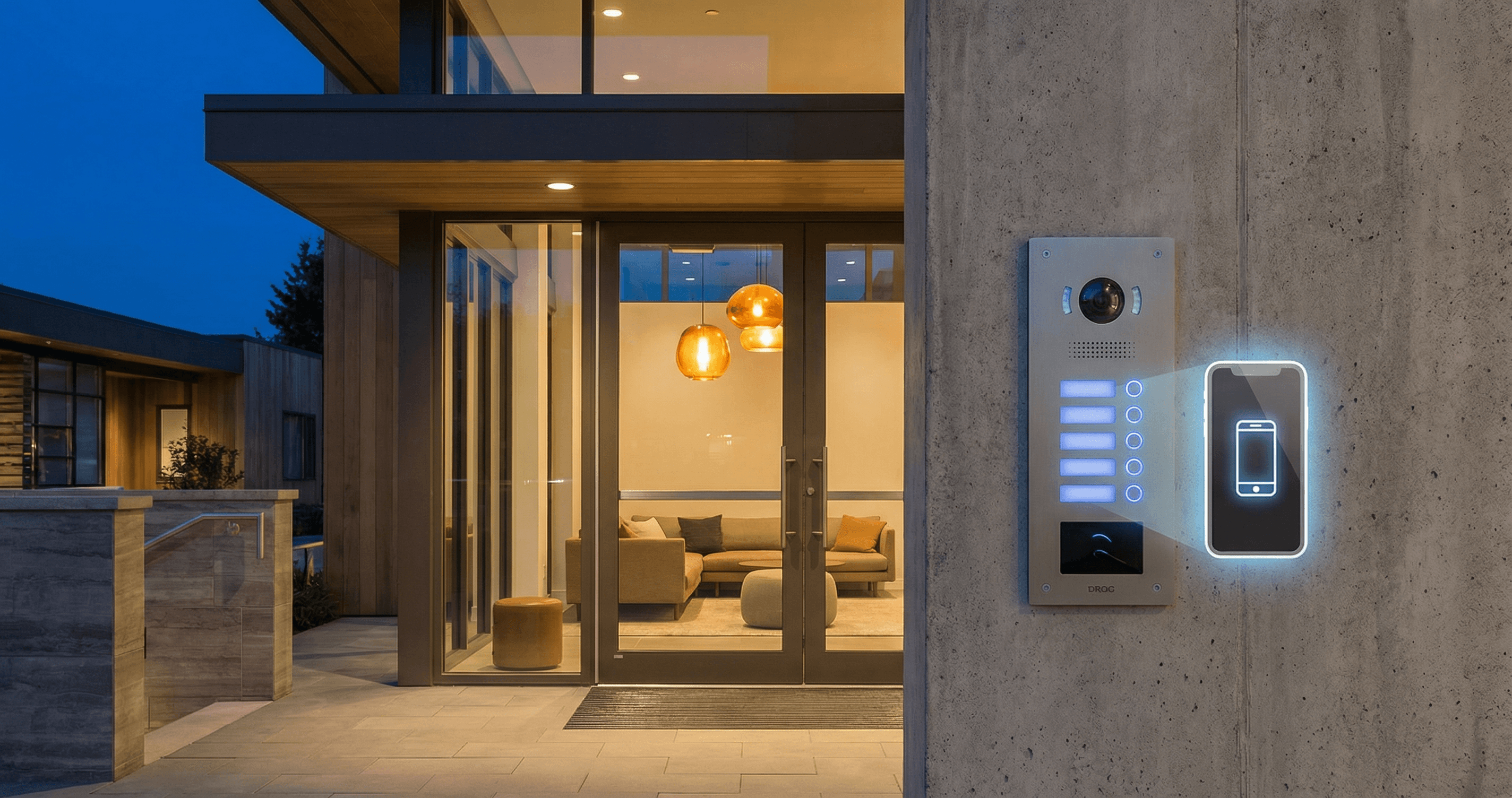
Modern software-first solutions work by redirecting your existing buzzer's phone line to an AI-powered answering service. Instead of ringing a resident's phone, the buzzer calls a virtual receptionist that:
- Answers instantly with a natural, friendly greeting
- Identifies the visitor through conversation (not button-pressing)
- Applies your policies to decide access (auto-unlock, notify resident, or decline)
- Logs everything for complete audit trails
The key insight: your existing phone-based intercom already has all the infrastructure needed. The buzzer places calls and accepts unlock commands. Software simply provides the intelligent layer that decides when to unlock, and when not to.
No Hardware, No Installation, No Approval Delays
Because these solutions work through phone call forwarding, setup involves:
- Updating the dial-out number in your call box's directory
- Configuring basic access rules
- That's it.
Typical setup time: 10-15 minutes per building. No electricians, no installation appointments, no waiting for condo board approval.
What Property Managers Should Look For
Not all software-first access solutions are created equal. Here's what to prioritize:
1. Policy-Driven Screening
Your buildings have different needs. A luxury high-rise might want stricter screening than a garden apartment community. Look for solutions that let you set building-wide policies while allowing unit-level customization.
Good policy capabilities include:
- Delivery auto-unlock during specific hours (e.g., 8 AM - 8 PM)
- After-hours routing to on-call or automatic decline with callback instructions
- VIP lists for pre-approved visitors (family, regular vendors)
- Solicitor identification and blocking
2. Delivery Handling Automation
The solution should recognize major delivery carriers (Amazon, FedEx, UPS, USPS, DoorDash) and handle them appropriately: verifying intent, unlocking lobby access, and optionally notifying the resident.
This alone can eliminate a significant portion of delivery complaints.
3. Multi-Building Portfolio Support
If you manage multiple properties, you need centralized oversight. Look for:
- Single dashboard for all buildings
- Building-specific rule configuration
- Consolidated activity reports
- Role-based access for regional vs. site staff
4. Complete Audit Trails
Every interaction should be logged with timestamps, visitor identity (as stated), and outcome. This documentation protects you in disputes and supports compliance requirements.
For additional context on industry best practices for access logging, the Institute of Real Estate Management (IREM) publishes guidelines on security documentation for property managers.
5. Natural Language Rule Configuration
The best solutions let you set policies in plain English rather than complex configuration screens. For example: "Let Amazon deliveries in before 8 PM and send a notification to the unit" should be a simple instruction, not a multi-step wizard.
6. Maintenance and Vendor Access
Scheduled access windows with passphrases streamline vendor visits. Instead of coordinating key handoffs, you create a window: "HVAC vendor, Tuesday 2-4 PM, passphrase: winter service." The vendor calls, provides the passphrase, and gets access. Everything logged, no key management needed.
Implementation: Faster Than You Think
The 10-Minute Setup
Software-first solutions like Knockli can be deployed building-by-building in under 15 minutes:
- Update call directory - Change the dial-out number in your call box to your Knockli line
- Configure building rules - Set default policies for deliveries, after-hours, and general visitors
- Go live - The AI starts handling calls immediately
No appointments to schedule. No installations to coordinate. No residents to notify about entry interruptions.
Communicating to Residents
Residents may notice calls are answered differently. A simple notice explaining the upgrade (framing it as an amenity improvement) typically generates positive reception:
"We've upgraded our building access system to better handle deliveries and screen visitors. You'll now receive notifications when someone buzzes your unit, and deliveries can be accepted automatically during business hours. No action needed on your part, just enjoy fewer missed packages."
Some solutions offer optional resident apps for those who want more control, but they're typically not required for the system to work.
Phased Rollout for Portfolios
For property managers with multiple buildings, a phased approach works well:
- Pilot with 1-2 buildings - Choose properties with high delivery volume or complaint rates
- Validate results - Track complaint reduction and resident feedback
- Standardize and expand - Roll out across the portfolio using lessons learned
Measuring Success
Key Metrics to Track
Resident complaints (delivery-related): Track before and after. Software-first solutions commonly report 80-90% reductions in buzzer-related complaints.
Missed delivery rate: If your buildings track package returns or "sorry we missed you" notices, monitor this metric.
After-hours escalations: Count how many late-night calls reach on-call staff vs. being handled automatically.
Incident documentation: When access-related issues arise, evaluate whether you have better records to work from.
Expected Outcomes
Based on early adopter feedback and solution provider data, property managers implementing AI-powered access commonly report:
- Substantial reductions (often 80-90%) in delivery-related resident complaints
- Fewer after-hours escalations to on-call staff
- Better documentation for dispute resolution and compliance requirements
- Positive resident feedback on modernized building amenities
The National Multifamily Housing Council (NMHC) research indicates that over 70% of renters say smart building amenities influence their leasing decisions. This aligns with broader trends in resident expectations; the U.S. Department of Housing and Urban Development (HUD) has increasingly emphasized the role of technology in improving multifamily housing quality and operational efficiency.
Building access modernization directly addresses these expectations without requiring major infrastructure investment.
The Bottom Line
Legacy buzzer systems create operational headaches and resident frustration. Traditional hardware upgrades solve the problem but come with significant capital costs and deployment friction.
Software-first solutions represent a third path: modern access control that works with your existing infrastructure, deploys in minutes, and requires zero hardware investment.
For property managers facing budget constraints but competitive pressure to modernize, this approach offers a practical way to:
- Reduce resident complaints immediately
- Improve delivery handling across your portfolio
- Document access events for compliance and disputes
- Add a genuine amenity that influences leasing decisions
The buildings that thrive in competitive rental markets are the ones that make residents' daily lives easier. Smart access control, even without new hardware, is a straightforward way to deliver that value.
Ready to Modernize Your Portfolio?
Knockli's AI-powered access solution works with your existing phone-based intercoms to deliver smart visitor screening, delivery automation, and complete audit trails, with zero hardware costs.
Learn more about Knockli for Property Managers or see how it works with our interactive demo.
Managing multiple buildings? Our portfolio dashboard lets you configure policies across properties from one place. Request a demo to see it in action.
This article is part of our Property Insights series, designed for property managers and multifamily housing professionals. For more practical guidance on building technology and operations, explore our blog or dive deeper into 5 ways residents can avoid missed deliveries.
Related Articles
Apartment Access Control Without the Capital Expense
76% of apartment buildings still use physical keys. See how software-first access control delivers modern security without six-figure hardware costs.
AI Doorman for Property Managers: What It Is and Why It Works
An AI doorman handles building access 24/7 without staff. Learn how it works, what it costs, and why property managers are adopting it.
Last-Mile Delivery's $95 Billion Problem Routing Can't Solve
The logistics industry optimized routing while $95B in waste accumulates at building doors. Why old-stock housing drives delivery failure.