Building Access Compliance: ADA, Fair Housing, and Privacy
62% of property managers plan to upgrade access control systems within five years. Before you deploy, understand the compliance landscape: ADA accessibility requirements, Fair Housing obligations, tenant data privacy laws, and audit trail standards that protect both residents and your organization.
Knockli Team
Product Team
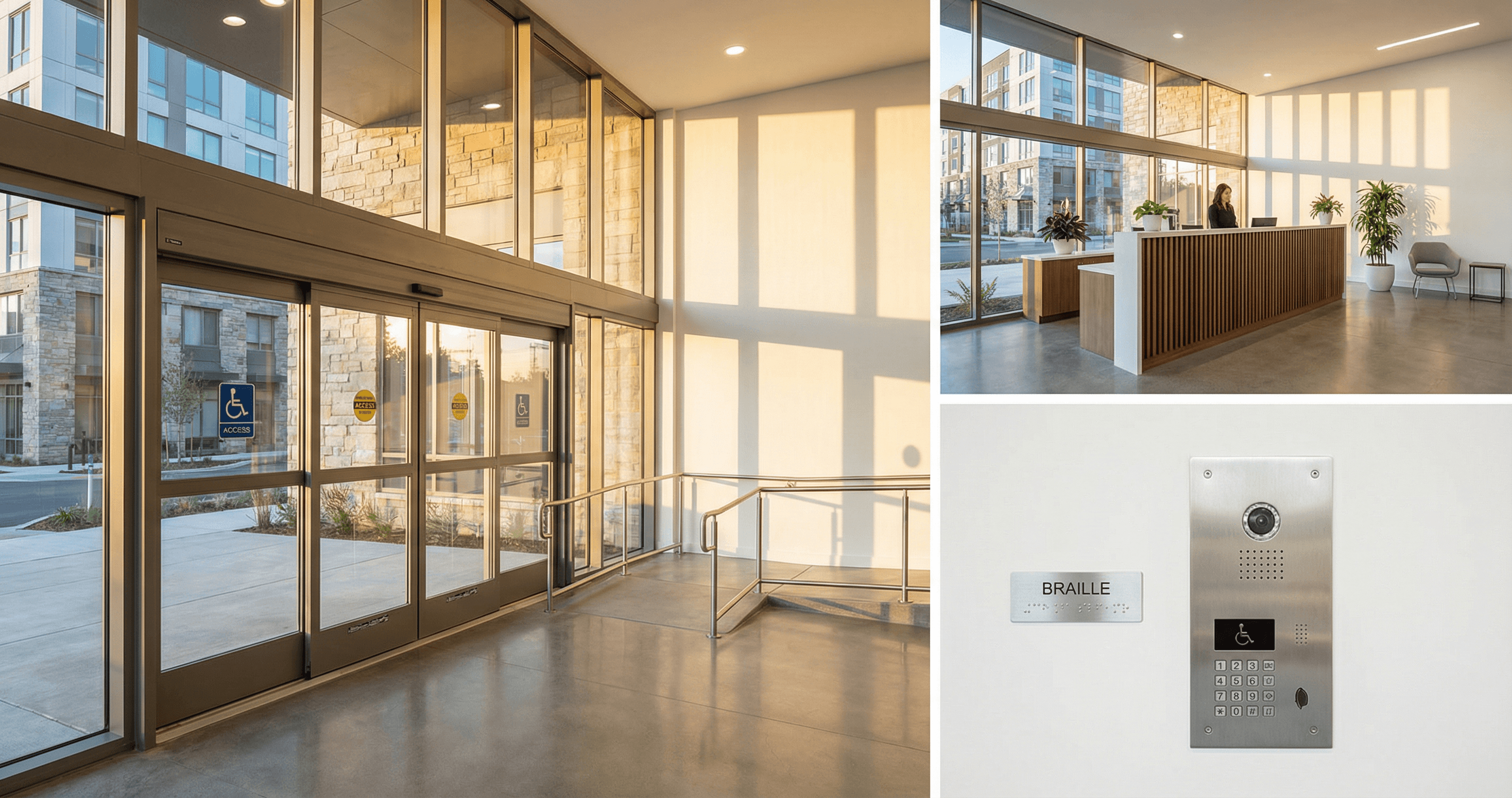
Building access compliance spans four distinct areas: accessibility, fair housing, data privacy, and record-keeping. Property managers evaluating access control technology need to understand each before deployment.
With 62% of property managers planning access control upgrades within five years, compliance considerations are moving from theoretical to operational. The technology you choose affects your obligations. This guide covers what you need to know.
The Compliance Landscape
Building access technology intersects with multiple regulatory frameworks:
- ADA (Americans with Disabilities Act): Physical accessibility requirements for intercom placement and operation
- Fair Housing Act: Non-discrimination requirements and reasonable accommodation obligations
- State and local privacy laws: Tenant data collection consent and biometric data handling
- Industry standards: Audit trail retention and documentation requirements
Each framework applies differently depending on your building type, location, and the technology you deploy. Software-only solutions that work with existing infrastructure face different compliance considerations than hardware installations that add cameras or biometric readers.
For property managers building a technology evaluation framework, compliance should be a core criterion alongside cost and functionality.
ADA Accessibility Requirements
The Americans with Disabilities Act establishes physical accessibility requirements for building entry systems. These apply to new construction, alterations, and existing facilities.
Intercom Mounting Height
According to U.S. Access Board guidelines, operable controls for building entry systems must be accessible to people with disabilities, including wheelchair users.
Key requirement: Intercom controls must be mounted no higher than 48 inches above the floor for forward reach. Side reach requirements allow up to 54 inches if there's no obstruction.
This applies to:
- Intercom call buttons and keypads
- Card readers and fob scanners
- Touchscreens and video intercoms
- Any control a resident or visitor must operate to gain entry
Accessible Alternatives
When building entry systems include features that present barriers, property managers must provide accessible alternatives. Examples:
- Voice-based systems for residents who cannot use touchscreens
- Audio-only options for visitors at video intercoms
- Alternative entry methods for residents who cannot use fobs or keycards
Software-first solutions that add AI capabilities to existing intercoms typically inherit the accessibility profile of the existing hardware. New hardware installations require full ADA compliance evaluation.
Audio and Visual Considerations
Entry systems should accommodate residents with hearing or vision impairments:
- Audio volume must be adjustable
- Visual displays should have adequate contrast
- Alert systems should include both audio and visual components
Fair Housing Act Obligations
The Fair Housing Act prohibits discrimination in housing based on race, color, national origin, religion, sex, familial status, and disability. Building access systems can implicate Fair Housing in several ways.
Reasonable Accommodations
Property managers must make reasonable accommodations for residents with disabilities. For building access, this might include:
- Providing alternative entry methods for residents who cannot use standard systems
- Adjusting automatic timeout settings for residents who need more time
- Allowing personal attendants or aides building access during necessary hours
HUD guidance on reasonable accommodations establishes that accommodations are required when they are necessary for a person with a disability to have equal opportunity to use and enjoy a dwelling.
Non-Discriminatory Access Policies
Building access rules must apply equally to all residents. Consider whether your policies create disparate impact:
- After-hours restrictions that affect some residents more than others
- Guest policies that treat certain types of visitors differently
- Verification requirements that are harder for some demographics to satisfy
When implementing AI-powered access systems that screen visitors, ensure the screening criteria don't create discriminatory outcomes. Policy-based rules like "allow verified deliveries during business hours" are generally safer than subjective screening criteria.
For detailed guidance on configuring after-hours access policies, see our dedicated article.
Facial Recognition Concerns
The Government Accountability Office (GAO) has raised concerns about facial recognition technology in rental housing. Their findings include:
- Higher error rates for certain demographic groups
- Limited federal oversight of facial recognition in housing contexts
- Privacy concerns specific to residential settings
These findings have implications for Fair Housing. If a facial recognition system produces more false rejections for residents of certain races or ethnicities, the technology could create discriminatory barriers to building access.
Property managers considering facial recognition should evaluate:
- Vendor error rate data across demographic groups
- Whether facial recognition is the only entry method or one of several options
- Consent and disclosure requirements in their jurisdiction
Tenant Data Privacy Laws
Building access systems collect data: who enters, when, how they were verified, and potentially biometric information. Privacy laws govern how this data can be collected, used, and retained.
NYC Tenant Data Privacy Act
New York City's Tenant Data Privacy Act (Local Law 63) establishes specific requirements for smart building systems:
- Written consent required: Property owners must obtain written consent before collecting tenant data through smart access systems
- Purpose limitation: Data can only be used for the stated purpose
- Third-party restrictions: Limits on sharing tenant data with third parties
- Statutory damages: Tenants can recover damages for violations
This law specifically addresses building access technology. If you operate properties in NYC, review your data collection practices and consent procedures.
State Biometric Laws
Several states regulate biometric data collection, with Illinois leading through the Biometric Information Privacy Act (BIPA).
BIPA requirements for building access systems using biometrics (facial recognition, fingerprint readers):
- Written disclosure: Inform individuals that biometric data is being collected
- Written release: Obtain consent before collection
- Retention policy: Establish and follow a data retention schedule
- Storage and protection standards: Protect biometric data with reasonable security measures
BIPA has generated significant litigation, with statutory damages of $1,000 per negligent violation and $5,000 per intentional violation. Texas and Washington have similar laws with varying requirements.
General Data Protection Principles
Even without specific tenant privacy laws, property managers should follow data protection best practices:
- Collect only data necessary for legitimate purposes
- Inform residents what data is collected and how it's used
- Implement reasonable security measures
- Establish retention and deletion schedules
- Provide residents access to their own data on request
AI-powered building access solutions that process visitor interactions generate data. Understand what your vendor collects, stores, and how long they retain it.
Audit Trail and Record-Keeping
Beyond privacy, building access systems should support compliance documentation through comprehensive audit trails.
What to Document
Access control audit trails should capture:
- Entry events: Who entered, when, which entry point, and how they were verified
- Access decisions: When access was granted or denied, and why
- Policy changes: When building access rules were modified and by whom
- Incident records: Unusual events, security concerns, or access disputes
According to BOMA International standards, building access control systems should maintain audit logs that support security investigations, compliance verification, and dispute resolution.
Retention Periods
Retention requirements vary by jurisdiction and purpose:
- General access logs: Most industry guidance suggests 90 days to one year minimum
- Incident-related records: Retain until any related claims are fully resolved
- Personnel access records: May need to align with employment record retention
- Biometric data: Some laws require deletion when the purpose is fulfilled or employment ends
When in doubt, longer retention is generally safer than shorter. However, privacy laws may limit retention of certain data types. Balance compliance needs against privacy obligations.
Documentation for Disputes
Comprehensive access logs serve critical functions:
- Resolving resident complaints about unauthorized entry
- Defending against claims of discriminatory access practices
- Investigating security incidents
- Demonstrating compliance with accommodation requests
Systems that provide detailed activity logs with timestamps, decision rationale, and complete event history support these needs better than systems with limited logging. Solutions like Knockli maintain comprehensive activity logs for every visitor interaction, giving property managers the documentation they need for compliance and dispute resolution.
Compliance Checklist
Use this checklist when evaluating building access technology for compliance:
ADA Accessibility
- Intercom controls at 48 inches or below for forward reach
- Audio volume is adjustable
- Alternative entry methods available for residents with disabilities
- Timeout settings accommodate users who need more time
Fair Housing
- Access policies apply equally to all residents
- Reasonable accommodation process documented
- Guest and visitor policies are non-discriminatory
- If using facial recognition, error rates reviewed across demographics
Data Privacy
- Resident consent obtained before data collection (if required by jurisdiction)
- Biometric disclosure and release forms (if applicable)
- Data retention policy established and documented
- Third-party data sharing practices reviewed
Audit Trail
- System logs all entry events with timestamps
- Access decisions and rationale captured
- Policy changes documented
- Logs exportable for compliance review
Choosing Compliant Technology
Building access compliance depends partly on the technology you choose. Consider:
Software-first solutions that work with existing intercom hardware inherit much of that hardware's compliance profile. If your current intercom meets ADA height requirements, adding AI screening capabilities doesn't change the physical accessibility situation. These solutions may have simpler privacy considerations if they don't add cameras or biometric readers.
Hardware installations require full compliance evaluation. New video intercoms, touchscreens, or biometric readers must meet ADA requirements and may trigger additional privacy obligations depending on their capabilities.
AI and automation features raise unique questions about decision-making transparency, data collection, and potential disparate impact. Vendors should be able to explain how their systems make access decisions and what data they collect.
When evaluating vendors, ask:
- What data does your system collect about residents and visitors?
- How long is that data retained?
- Can I export audit logs for compliance review?
- How does your system handle reasonable accommodation requests?
- What accessibility features are built in?
Taking the Next Step
Building access compliance isn't optional. Understanding your obligations before deploying new technology prevents costly remediation and legal exposure.
If you're evaluating building access solutions and want to understand how compliance considerations apply to software-first approaches, explore how Knockli works for property managers. Our system maintains comprehensive audit trails, works with your existing compliant hardware, and gives you the documentation you need for compliance confidence.
For more on technology evaluation, see our building access technology evaluation framework and ROI analysis guide.
Related Articles

Last-Mile Delivery's $95 Billion Problem Routing Can't Solve
The logistics industry optimized routing while $95B in waste accumulates at building doors. Why old-stock housing drives delivery failure.
Apartment Access Control Without the Capital Expense
76% of apartment buildings still use physical keys. See how software-first access control delivers modern security without six-figure hardware costs.
Smart Buzzer for Rentals: Automate Every Building Entrance
A smart buzzer for rentals automates visitor screening, delivery access, and entry policies with no hardware changes. Full guide for property managers.