Scale Multifamily Operations Without Scaling Your Payroll
Property managers growing their portfolios face a structural challenge: traditional operations scale linearly with headcount. Centralized operations and portfolio-level technology break that pattern, letting operators add buildings without proportionally adding staff.
Knockli Team
Knockli
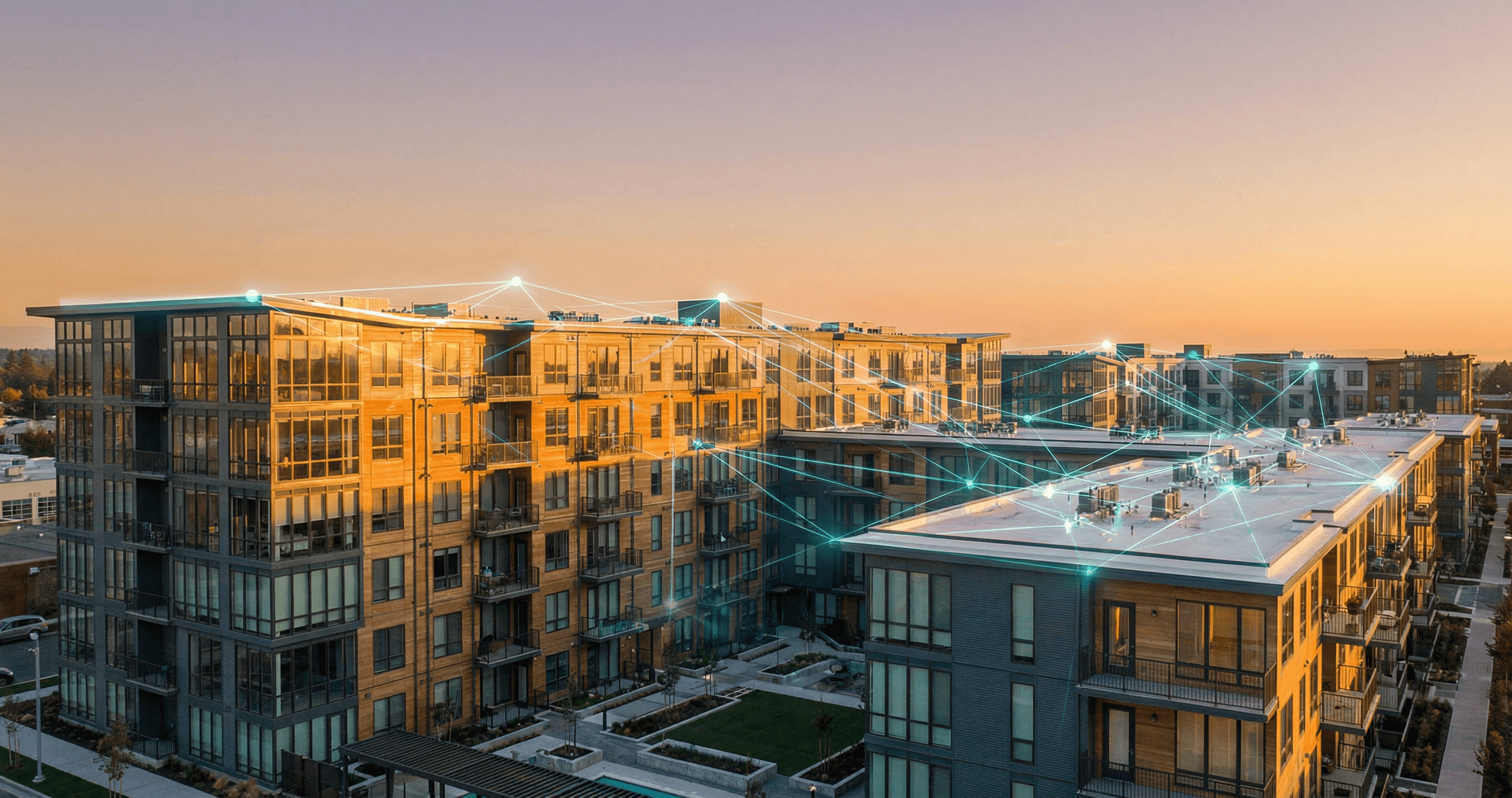
Seventy-seven percent of property managers expect to grow their portfolios this year. That figure, from Buildium's 2025 Property Management Industry Report, signals an industry leaning hard into expansion. But there's a problem embedded in that optimism: the question of how to scale property management operations without proportional headcount growth has no easy answer under the traditional model. More buildings mean more staff to coordinate access, manage maintenance, handle vendors, and field resident communication.
That model is breaking.
Leasing and maintenance roles experience 30%+ annual turnover, creating a perpetual hiring cycle that drains budgets and disrupts operations at every level. At the same time, 93% of property management companies report rising operating costs, squeezing margins from both sides. The property managers who figure out how to scale property management operations without linearly scaling payroll will be the ones who build durable, profitable portfolios. Those who can't will hit a ceiling where each new building costs more to operate than it returns.
This article lays out the operational strategies and technology categories that allow portfolio operators to add buildings without adding proportional staff.
Why You Can't Scale Property Management With Headcount Alone
The traditional approach to multifamily portfolio management follows a simple formula: one building requires X staff members, two buildings require 2X, ten buildings require 10X. That linear model worked when labor was affordable and available. Neither condition holds today.
The U.S. Bureau of Labor Statistics reports approximately 39,000 annual openings for property, real estate, and community association managers, against a base of 466,100 existing positions. With only 4% projected employment growth, the labor pool is not expanding fast enough to match industry growth ambitions.
Property management staffing challenges compound at scale. Turnover does not just create vacancies for new buildings. It forces constant backfilling of existing roles. Each departure carries recruitment costs, training time, and a temporary drop in service quality that affects resident satisfaction and retention. For a portfolio adding five buildings per year while experiencing significant staff turnover, the net hiring demand grows faster than the portfolio itself.
The cost pressure is real and well-documented. 93% of property management companies report rising operating costs, making the traditional model of scaling staff with buildings unsustainable. That data point, from Buildium's industry survey, captures why the most forward-thinking operators are pursuing a fundamentally different approach: disconnecting building count from headcount entirely.
Where Operational Hours Disappear
Before redesigning how your portfolio operates, it helps to understand where property management hours actually go. Across multi-building portfolios, operational hours cluster in predictable categories:
- Access coordination (buzzer calls, visitor screening, vendor entry): 25-30% of routine time
- Resident communication (complaints, updates, inquiries): 20-25%
- Delivery management (package access, missed delivery follow-up): 15-20%
- Maintenance coordination (scheduling, vendor access, follow-up): 15-20%
- Administrative tasks (documentation, reporting, compliance): 10-15%
Based on typical multi-building portfolios, the first three categories represent 60-75% of routine operational time, and they share a common trait. They are high-volume, low-variability tasks that follow predictable workflows across every building in a portfolio.
Each additional building adds incremental load in every category. Without centralization, each property operates as an independent unit with its own processes, its own vendor relationships, and its own communication patterns. A portfolio of ten buildings doesn't create ten times the complexity of one building. It creates ten parallel operational silos, each generating its own interruptions, escalations, and administrative overhead.
The compounding effect is subtle but powerful. A single missed delivery becomes a resident complaint, which becomes a phone call, which becomes an investigation, which becomes a resolution effort. Multiply that chain across dozens of buildings and hundreds of units, and the operational drag consumes all available staff capacity before strategic work even enters the picture.
This is the structural challenge of portfolio growth under the traditional model. You don't just need more people. You need more people doing the same work in parallel across separate buildings, with no efficiency gain from scale. The tenth building generates exactly the same per-unit operational burden as the first.
For a detailed look at where these hours go and which tasks respond best to automation, see our analysis of automating routine building operations without adding staff.
The Centralization Playbook
Centralized building operations represent the single most effective strategy for scaling a portfolio without proportional staffing growth. Rather than replicating staff and processes at each building, centralization consolidates decision-making, standardizes policies, and creates portfolio-wide visibility from a single operational layer.
AppFolio's research on centralizing multifamily teams highlights the shift: operators who centralize achieve economies of scale that per-building management simply cannot match. Bisnow's reporting on the trend confirms that apartment owners increasingly view centralization as a necessary revenue strategy, not merely a cost-cutting exercise. The goal is not just spending less. It is doing more with the same resources.
Here is what the shift looks like across core operational areas:
| Operational Area | Traditional (Per-Building) | Centralized |
|---|---|---|
| Visitor and access policies | Each building has its own rules, managed by on-site staff | Standardized policies applied portfolio-wide, with building-specific overrides (tools like Knockli enable this for building access specifically) |
| Vendor coordination | Building managers handle scheduling individually | Centralized vendor relationships with scheduled access across all properties |
| After-hours coverage | Rotating on-call staff per property | Single centralized system handles all buildings simultaneously |
| Resident communications | Each property manager responds independently | Templated responses via centralized communication platform |
| Reporting and compliance | Building-level spreadsheets, manual consolidation | Unified dashboard with portfolio-wide analytics |
| Delivery management | Per-building carrier arrangements | Automated delivery access rules applied across all buildings |
The difference is not incremental. Operators report that centralized operations can increase the building-to-staff ratio significantly compared to per-building management. A property manager overseeing five buildings under the traditional model may manage fifteen to twenty under a centralized one, depending on building size and complexity.
The key distinction: centralization does not mean less attention to each building. It means less repetitive work per building, with technology handling standardized tasks and human attention directed where judgment and relationship-building actually matter.
Implementing centralization follows a predictable sequence. Start by auditing which processes vary meaningfully between buildings and which are essentially identical. Standardize the identical ones first (access policies, vendor protocols, communication templates). Then deploy technology to automate those standardized processes portfolio-wide. Finally, redirect freed capacity toward building-specific work that benefits from local knowledge and personal relationships.
Scale Property Management With Technology, Not Headcount
Centralization requires technology to function. Without the right tools, centralizing operations simply moves the bottleneck from distributed on-site staff to a smaller team drowning in tasks from more buildings. The technology layer is what makes centralization viable at scale.
The good news: the technology landscape has matured rapidly. AI adoption in property management jumped from 20% to 58% in a single year, according to Buildium's industry report. More importantly, EliseAI's State of AI in Multifamily research found that 92% of operators who implemented AI report reduced operating expenses, with 77% reporting improved NOI.
Those are not aspirational projections. They are reported outcomes from operators who have already made the shift.
The technology categories that enable portfolio scaling fall into four areas:
1. Building access automation. Visitor screening, delivery access, and after-hours management can be handled by AI systems that operate across every building in a portfolio from a single dashboard. Solutions like Knockli enable centralized access policies with building-specific rules, allowing one manager to configure and monitor access for dozens of buildings the same way they would handle one. No per-building staffing required.
2. Maintenance workflow automation. Work order routing, vendor scheduling, and follow-up tracking reduce the coordination overhead that multiplies with each additional property. Centralized maintenance platforms eliminate per-building administrative drag and give portfolio operators visibility into maintenance patterns across all buildings.
3. Tenant communication AI. Routine inquiries (lease questions, amenity hours, maintenance status updates) can be handled without staff involvement. This directly addresses the 20-25% of operational time consumed by repetitive resident communication, freeing team members for higher-value interactions that require empathy and judgment.
4. Financial consolidation and reporting. Portfolio-wide dashboards that aggregate performance data across buildings eliminate the manual reporting work that grows linearly with property count. Real-time visibility into NOI, occupancy, and expense trends across the entire portfolio enables faster, more informed decisions.
The common thread across all four categories: each replaces per-building manual work with portfolio-wide automation. The cost of adding a building to these platforms is incremental. The cost of adding a building under traditional staffing models is linear. That gap widens with every property you add.
For a deeper look at how the industry is navigating this technology transition, see our analysis of AI adoption in property management and what separates successful implementations from stalled ones.
Building the Business Case
The financial argument for technology-enabled scaling becomes clearer when modeled against the traditional alternative.
Consider a simplified cost comparison at three portfolio sizes:
| Portfolio Size | Traditional Staffing (Annual) | Centralized + Technology (Annual) | Estimated Savings |
|---|---|---|---|
| 10 buildings | ~$450,000 (3 FTEs + overhead) | ~$280,000 (1.5 FTEs + tech stack) | ~38% |
| 25 buildings | ~$1,125,000 (7.5 FTEs + overhead) | ~$520,000 (3 FTEs + tech stack) | ~54% |
| 50 buildings | ~$2,250,000 (15 FTEs + overhead) | ~$840,000 (5 FTEs + tech stack) | ~63% |
Estimates based on industry averages for property management staffing costs. Actual figures vary by market, building size, and portfolio composition.
The savings percentage increases with scale because technology costs grow incrementally while staffing costs grow linearly. Adding a building to a centralized technology platform might cost $150-400 per month. Adding a building under the traditional model means recruiting, onboarding, training, and retaining additional staff members, with all the turnover risk that entails.
The broader industry is placing its bet on this direction. PropTech venture capital investment reached $15.1 billion in 2024, a 32.5% increase from the prior year according to CRETI. That capital is flowing toward exactly this category of portfolio-scaling technology: platforms that let operators grow revenue without proportionally growing payroll.
For property owners and investors evaluating technology spend, the framework is straightforward. Map current per-building staffing costs, model the centralized alternative at your target portfolio size, and calculate the crossover point. For a detailed approach to building the business case for access technology, the numbers typically show positive ROI within the first quarter after implementation, with the gap widening every time a new building comes online.
Beyond direct cost savings, the centralized model delivers qualitative advantages that compound over time. Standardized operations produce more consistent resident experiences across your portfolio. Centralized data gives you visibility into performance patterns you cannot see when each building reports independently. And a technology-enabled team can respond to portfolio growth opportunities faster, because adding a building no longer requires a months-long staffing ramp.
From Growth Bottleneck to Growth Multiplier
The property management industry is at an inflection point. Portfolio growth is accelerating, staffing constraints are tightening, and operating costs keep climbing. Operators who treat headcount as the only lever for absorbing new buildings will find that growth becomes a liability instead of an asset.
Centralization, supported by the right technology stack, transforms the economics of portfolio growth. Each new building adds revenue without proportionally adding cost. Teams spend less time on repetitive access coordination, vendor management, and resident communication across every property, and more time on the strategic work that improves portfolio performance, resident retention, and NOI.
The playbook is clear: standardize operations, centralize decision-making, and deploy technology that handles high-volume tasks building by building. The operators who execute on this today will build a structural cost advantage that late movers will struggle to replicate.
Your next building should not require your next hire. Knockli's AI-powered access management centralizes visitor screening, delivery access, and after-hours coverage across your entire portfolio from a single dashboard. No hardware changes required. Setup takes 10-15 minutes per building. See how portfolio operators are scaling access management without scaling staff.
Related Articles
Smart Building Access: Breaking the 16% Adoption Ceiling
76% of multifamily properties still rely on traditional keys despite 72% planning upgrades. What blocks smart access adoption.
Renter Technology Expectations Reshaping Multifamily Leasing
Survey data from 172,000+ renters reveals which technology expectations now drive leasing decisions and where property managers should invest in 2026.
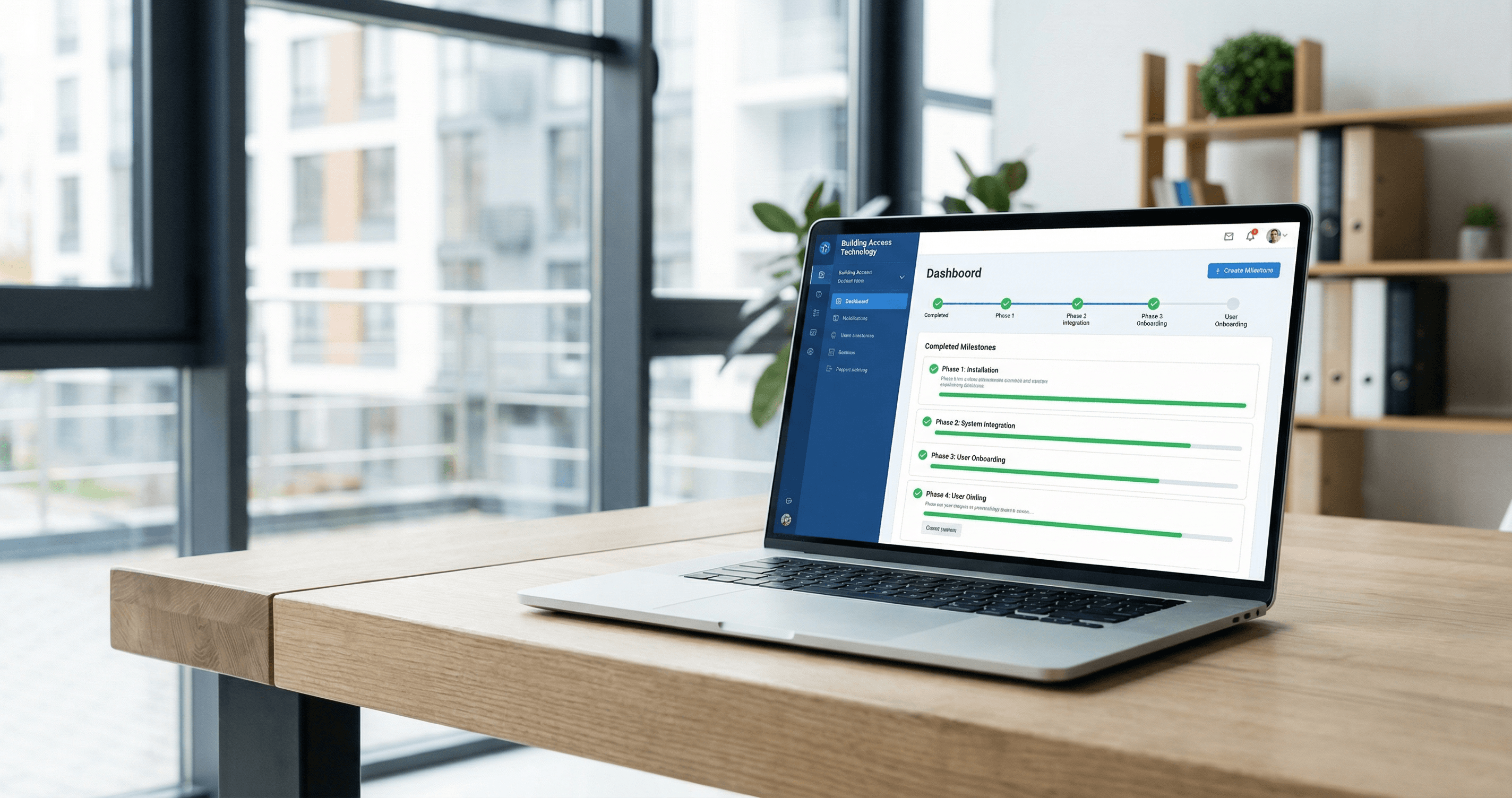
Building Access Projects That Stall: Keep Yours Moving
Technology implementation is a top-3 challenge for property managers. Five reasons building access projects stall and how to avoid them.